.png)
Yacht Sun Shade Guide: Choosing the Right Setup for Boats Over 60 Feet

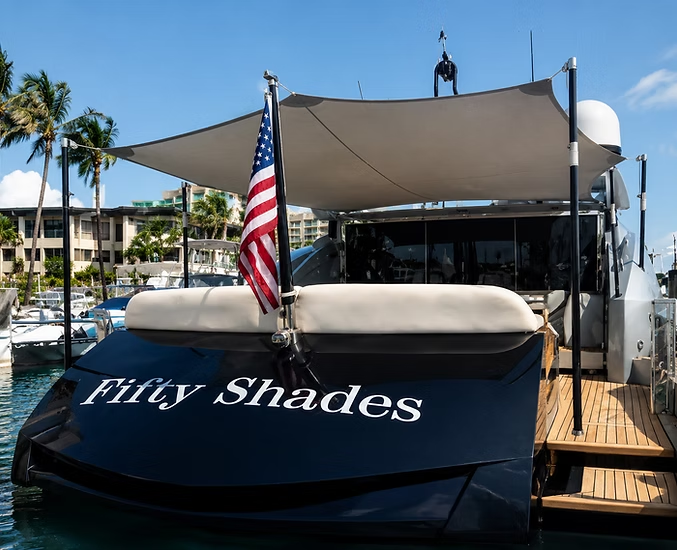
A yacht shade pole is the core component behind most removable shade systems on larger boats, and choosing the right one gets more specific once a vessel passes the 60 ft mark. A pole and panel setup that works well on a 40 ft boat does not automatically scale up, since a wider deck and a taller bridge change the load on the poles and the span the fabric has to cover. This guide walks through what changes on boats over 60 ft and how to configure a Sunfly Poles system for that size range.
What a Yacht Shade Pole Actually Does
A yacht shade pole is a fixed length pole, usually carbon fiber or aluminum, that drops into a boat's existing 1.5 inch rod holders and holds a shade panel taut without drilling or support straps. The pole anchors one end of the shade fabric, and a matching pole at the other end completes the span. Because the poles are removable, a crew can rig shade for the day and pull it down without leaving any hardware behind on the deck.
This approach works the same way whether the boat is a sportfishing convertible or a cruising yacht, since the mounting method depends on the rod holder, not the hull type.
Why Boats Over 60 ft Need a Different Approach
Smaller boats usually get by with a single 6 ft or 8 ft pole pair, since the deck is narrower and the span between poles is short. On a yacht over 60 ft, the aft deck, cockpit, or bridge is wider, and the poles are often working with a longer, heavier fabric panel.
Longer Spans Need More Support
A wider span puts more strain on the middle of the panel. Without added support, the fabric can sag, pool rainwater, and drop low enough to interfere with rod tips or overhead rigging. That is the main reason larger yachts benefit from pairing standard rod holder poles with a topping lift pole, which lifts the center of the panel and keeps the whole system taut across a longer distance.
Carbon Fiber or Aluminum for a Larger Yacht
Sunfly Poles offers both carbon fiber and aluminum in the same 6 ft and 8 ft pair lengths, and the choice matters more as boat size increases. Carbon fiber is roughly 40 percent lighter than aluminum and holds its shape without support straps, which is useful when a panel is spanning a wider deck. It also resists corrosion in salt water, a factor for any boat that spends extended time offshore.
Aluminum remains a dependable, lower cost option and uses the identical rod holder mounting system, so the decision usually comes down to weight, finish, and budget rather than a difference in how the system installs.
Yacht Shade Pole Options Compared
Setup | Best For | Key Feature |
Aluminum pole pair (6 ft or 8 ft) | Smaller yachts and cruisers under 65 ft | Lower cost, same rod holder mounting |
Carbon fiber pole pair (6 ft or 8 ft) | Yachts and sportfish boats up to 100 ft | Lighter weight, corrosion resistant, no support straps |
Carbon fiber pair plus topping lift pole | Flybridge yachts 45 to 100 ft with a wide deck | Lifts the center span for water runoff and rod clearance |
Adding a Topping Lift Pole on Wider Decks
A topping lift pole is a 3 ft or 4 ft carbon fiber lifting arm built specifically for flybridge and larger vessels from 45 to 100 ft. It uses a custom Delrin top pulley fitting and the same patented 316 stainless steel duo cam cleat found across the Sunfly Poles line, so a crew already familiar with the standard poles does not need to learn a separate system.
Once the outer rod holder poles are set and the fabric is secured, the topping lift pole raises the center of the panel, which helps rain run off to the sides and keeps the fabric clear of rod tips near the fighting chair or bridge structure.
How the Sunfly Boat Shade System Comes Together
The full Sunfly boat shade system is built around a small set of shared parts: the 1.5 inch pole core, the 316 stainless duo cam cleat, angled Delrin base inserts, and a Soltis 86 mesh panel that blocks about 88 percent of solar radiation while letting heat escape underneath. On boats over 60 ft, the same components apply, with the topping lift pole added where the span calls for it.
This shared parts approach comes out of decades of sportfishing boat canvas work at Canvas Designers, the Riviera Beach, Florida shop that has built and repaired marine canvas, shade, and rigging since 1985. That background is part of why the pole system fits major sportfish and convertible builds without needing a custom design for every boat.
Care for a Yacht Shade Pole System
A larger shade setup benefits from the same basic maintenance as a smaller one:
Rinse the poles and cam cleats with fresh water after saltwater trips.
Inspect the cam cleat once a season for salt buildup that could affect line tensioning.
Spot clean the Soltis 86 fabric with mild soap and a soft brush, and skip the pressure washer.
Store the poles in a WeatherMAX bag between trips to protect the finish.
Conclusion
Choosing the right yacht shade pole setup for a boat over 60 ft comes down to matching pole material, length, and configuration to the width of the deck being covered. A standard pole pair works for many layouts, while a wider bridge or cockpit usually benefits from adding a topping lift pole to support the center of the span. If you want help sizing the right combination for your vessel,contact us today and the team can walk through pole length, finish, and configuration for your boat.
Frequently Asked Questions
What size yacht shade pole do I need for a boat over 60 ft?
It depends on the deck layout. An 8 ft pole pair typically suits a wider span, and a topping lift pole is often added on flybridge boats between 45 and 100 ft to support the center of the panel.
Is carbon fiber worth it over aluminum for a larger yacht?
Carbon fiber is lighter and resists corrosion better in salt water, which matters on a boat that spends more time offshore. Aluminum uses the same mounting system at a lower cost.
Do I need a topping lift pole on every boat over 60 ft?
Not necessarily. It is most useful on flybridge and larger vessels where the panel spans a wide deck and needs center support to avoid sagging.
Does a yacht shade pole system require drilling into the deck?
No. The poles drop into existing 1.5 inch rod holders, and no permanent hardware is drilled into the boat.
How much maintenance does a yacht shade pole system need?
Basic upkeep is enough: rinse with fresh water after saltwater use, check the cam cleat each season, and store the poles in a protective bag when not in use.
Can the same pole system work on both sportfish and cruising yachts?
Yes. The mounting method depends on the boat having standard 1.5 inch rod holders, not on whether the vessel is a sportfish convertible or a cruising yacht.


Comments