.png)
Boat Shade Made in USA: Why It Matters for Marine Products

Updated: May 18
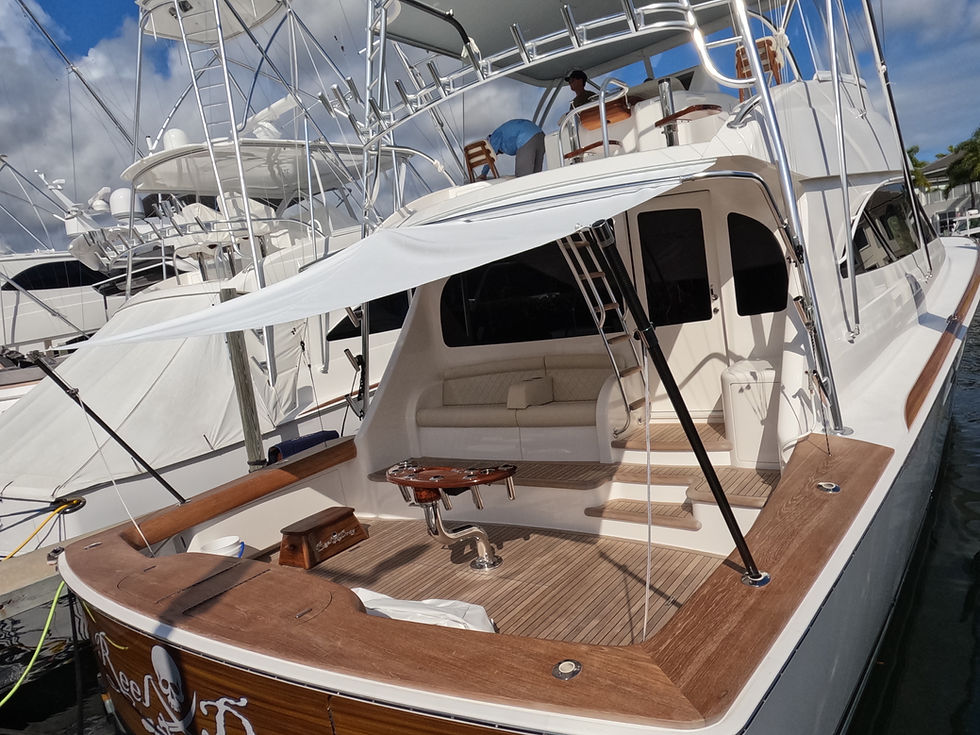
When boaters search for a boat shade made in USA, they are often asking a deeper question than just geography. They want to know whether the product was built to a standard that can hold up in a saltwater environment, under constant sun, wind, and weather, season after season. Where a product is made frequently determines the quality of materials used, the consistency of manufacturing, and the level of accountability behind the design.
This post looks at why domestic manufacturing matters specifically for boat shades and what it actually means for the person using the product on the water.
What "Made in USA" Actually Means for Marine Products
The Federal Trade Commission defines "Made in USA" as meaning a product is "all or virtually all" made in the United States. For marine products, this distinction carries real weight because the standards applied to materials, testing, and assembly can vary significantly between domestic and offshore manufacturing.
For something like a boat sun shade system, the materials must resist UV degradation, salt corrosion, moisture absorption, and physical stress from wind and boat movement. Products built to domestic standards are more likely to be tested under conditions that reflect actual marine use, and they are more often subject to quality control processes that importers are not always required to follow.
That does not mean every imported product is poor quality or that every domestic product is excellent. However, when you are looking at a shade system that will mount on your boat and stay there through multiple seasons, the origin of the product and the standards behind it are worth understanding.
Why Material Quality Differs Between Domestic and Imported Boat Shades
Carbon Fiber and Aluminum Standards
Carbon fiber poles used in boat shade systems need to meet specific standards for strength and flexibility. In the United States, carbon fiber manufacturing follows well established processes for aerospace, marine, and sporting equipment applications. Domestic manufacturers have direct access to these supply chains and the quality controls that come with them.
Aluminum fittings on a boat shade face constant exposure to salt air. Marine grade anodized aluminum resists corrosion far better than standard aluminum coatings. When fittings are sourced and processed domestically, there is greater consistency in the anodizing depth and finish quality, which directly affects how long the fittings hold up at sea.
Hardware and Fittings
Stainless steel hardware used in marine environments is typically rated to a specific grade. Marine grade stainless steel, most commonly 316 grade, contains molybdenum, which improves resistance to chloride corrosion. Products manufactured domestically are more likely to clearly disclose the grade of stainless used and to source it from verified suppliers.
When hardware is sourced from overseas with less traceability, the grade may not match what is labeled, which leads to rust and failure in saltwater conditions far sooner than expected.
The Marine Environment Demands Higher Standards
A boat shade is not a product that sits indoors. It mounts on a vessel that moves through saltwater spray, sits under direct UV radiation for hours at a time, and must hold its position against wind while underway. These conditions degrade materials faster than almost any other consumer environment.
UV exposure alone can cause lesser quality polymers and coatings to become brittle and crack within a single season. Salt accelerates metal corrosion at a rate that makes even slight imperfections in a coating become structural problems over time.
For these reasons, the materials and finishing standards used in a boat sun shade matter more than they would for a product used in a sheltered or controlled environment. A shade system built with proper marine grade materials from the outset requires less replacement, holds its appearance longer, and performs reliably throughout its working life.
According to the National Marine Manufacturers Association, the American recreational boating industry places consistent emphasis on product safety and durability standards, which reflects the high demands of the marine environment on any equipment that goes on a vessel.
How the Sunfly Boat Shade System Reflects Domestic Quality
Pole Construction and Materials
The Sunfly boat shade system is built around carbon fiber poles that come in 6 foot pairs. The poles feature anodized aluminum fittings and have a 1-1/2 inch diameter, which fits most standard rod holders on center console and other open boats. Sunfly also offers powder coated versions in various colors for boaters who want a specific look to match their boat.
The carbon fiber used in Sunfly Poles is described as the strongest in the industry. Importantly, the poles are designed to be self supporting in rod holders, meaning no support straps are needed. This is a design decision that reflects an understanding of how the product will actually be used on a working fishing or cruising vessel.
Design Considerations for Real Boating Use
For larger vessels, Sunfly offers a Topping Lift Pole as an add on option. This is a carbon fiber lifting arm available in 3 foot or 4 foot sizes, designed to raise the center of the shade canopy for better water runoff and clearance. It includes a custom designed Delrin top pulley fitting and a 316 stainless steel duo cam cleat, which is a specific material choice that speaks directly to marine durability standards.
Sunfly Poles also come with an optional storage bag made from Weathermax 80 fabric, a marine grade material known for its resistance to UV and moisture. These details, from the stainless steel grade to the fabric choice on the storage bag, reflect the kind of material specificity that comes from designing for actual marine conditions rather than general outdoor use.
Comparison Table: Key Features to Look For in a Boat Shade
Feature | What to Look For | Why It Matters |
Pole Material | Carbon fiber or marine grade aluminum | Strength to weight ratio and corrosion resistance |
Fittings | Anodized aluminum or 316 stainless steel | Resists salt corrosion over multiple seasons |
Diameter | 1-1/2 inch standard | Fits most rod holders without modification |
Support Straps | Not required | Keeps deck clear for fishing and movement |
Color and Finish | Anodized or powder coated options | Maintains appearance and protects the base material |
Storage | Marine grade fabric bag | Protects poles during transport and off season |
Topping Lift Option | Available for larger vessels | Raises canopy center for clearance and water runoff |

Why Boaters Are Paying Closer Attention to Where Products Come From
Over the past several years, supply chain disruptions and quality inconsistencies in imported marine goods have pushed more boaters to pay attention to the origin of what they buy. For accessories that directly affect safety and comfort on the water, the margin for error is low.
A shade pole that fails at sea is not just an inconvenience. It can damage other equipment, create a hazard, or simply leave passengers exposed to conditions they were trying to avoid. For this reason, many experienced boaters now actively seek out a boat shade made in USA as a baseline consideration rather than an afterthought.
Beyond quality, buying domestically manufactured marine products also supports the broader American marine manufacturing sector, which employs a large and skilled workforce with decades of experience building products for some of the most demanding aquatic environments in the world.
What to Look for When Buying Boat Shades
Whether you are purchasing boat shades for a center console, a flats boat, or a larger offshore vessel, a few consistent factors will guide you toward a product that holds up over time.
First, look at the pole material and how the manufacturer describes it. Carbon fiber with specified fittings indicates more thought has gone into material selection than a product that vaguely references "marine grade" without specifics.
Second, check whether support straps are required. On a working boat, straps running across the deck are a practical problem. A pole system that is self supporting in rod holders keeps the layout cleaner and safer.
Third, look at hardware grades. If a product uses stainless steel, it should specify 316 grade for any components that will be in direct contact with salt air or water. Lower grades will show rust within a season.
Fourth, consider whether the manufacturer offers size options and add ons. A topping lift option, multiple pole lengths, and storage accessories suggest a product line built around real world use cases rather than a single generic solution.
Finally, think about finish options. Anodized and powder coated finishes behave differently in marine environments. Powder coating offers color variety and good corrosion protection when applied correctly. Anodizing provides a surface treatment that bonds to the aluminum itself and tends to be more durable long term in salt environments.
Conclusion
When you look for a boat shade made in USA, you are looking for more than a label. You are looking for a product built with material standards, design decisions, and manufacturing practices that reflect the real demands of boating. The marine environment tests equipment harder than most people expect, and the difference between a shade system that lasts one season and one that lasts several often comes down to material grade, fitting quality, and how carefully the product was designed for actual use.
Understanding where a product comes from and how it was made helps you make a better decision for your boat, your budget, and your time on the water. If you want to learn more about the Sunfly Poles system and which option fits your setup, contact us today.
Frequently Asked Questions
What does "boat shade made in USA" mean for product quality?
It generally means the product was designed, sourced, and assembled according to domestic manufacturing standards. For marine products, this often translates to more rigorous material specifications, particularly around corrosion resistance, UV stability, and structural strength, because domestic manufacturers have direct accountability for the performance of what they produce.
Why does material grade matter in a boat sun shade system?
The marine environment is one of the harshest conditions any product can face. UV radiation, salt air, moisture, and physical movement combine to degrade materials quickly. Using the correct material grade, such as 316 stainless steel for hardware or properly anodized aluminum for fittings, determines how long the system stays functional and looking good.
Can rod holder shade poles work on any center console boat?
Most rod holder based shade pole systems, including those designed with a 1 1/2 inch diameter, are built to fit standard rod holders found on the majority of center console boats. However, it is worth confirming your rod holder diameter before purchasing to ensure a proper fit.
Do boat shade poles need support straps to stay in position?
Not all systems require support straps. Some rod holder shade pole systems are designed to be self supporting, which means the poles hold the shade canopy in place without any straps running across the deck. This is a meaningful design advantage on a working fishing boat where deck space and casting clearance matter.
What is a topping lift pole and when would I need one?
A topping lift pole is an additional arm that attaches to a rod holder and raises the center of a shade canopy. It is useful on larger vessels where the middle of the canopy would otherwise sag, collecting water or limiting clearance for antennas, rods, or people. It improves water runoff and overall canopy shape without requiring any permanent installation.


Comments