.png)
Sun Shade for Center Console Boats: Rod Holder vs Hardtop vs Bimini

Updated: May 18
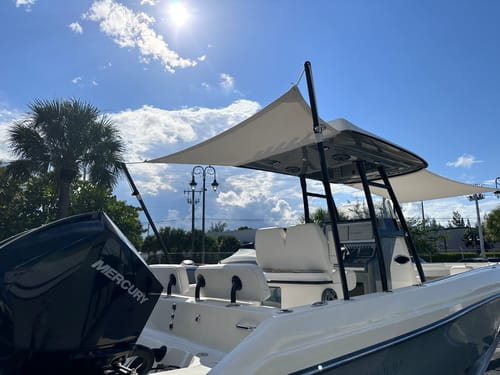
Finding the right sun shade for boat use is one of the most practical decisions you can make as a center console owner. Whether you are out on the water for a full day of fishing or cruising on a sunny afternoon, overhead shade makes a real difference in comfort and safety. The challenge is that center consoles are open by design, which means there is no built in protection from above.
Three main options exist for adding shade to a center console: rod holder based shade poles, bimini tops, and hardtop structures. Each takes a different approach, and each suits a different kind of boater. This guide breaks down how they work, what they offer, and where each one falls short so you can make a clear, informed choice.
Why Sun Shade Matters on a Center Console Boat
The open layout of a center console is part of what makes it such a versatile platform. Anglers can move all the way around the boat without obstacles, and the clean deck keeps lines from tangling. However, that same openness means the sun hits you from above with nothing in between.
Water reflects UV rays, which means exposure on a boat is typically higher than on land, even on overcast days. Over a long day on the water, that adds up. Beyond personal comfort, direct sun also warms up seating surfaces, electronics, and any bait or gear left in the open.
A well fitted boat shade system addresses this without changing what makes the center console layout work. The key is choosing one that matches how you actually use the boat.
Option 1: Rod Holder Based Shade Poles
How Rod Holder Poles Work
Rod holder based shade poles slide directly into the existing rod holders on your boat. A shade fabric or canvas is then stretched between the poles to create overhead coverage. Because the poles use hardware that is already on the boat, this approach requires no drilling, no welding, and no permanent structural changes.
The Sunfly boat shade system is built around this concept. Sunfly Poles are carbon fiber poles that come in 6 foot pairs with anodized aluminum fittings. They have a 1-1/2 inch diameter designed to fit most standard rod holders, and they are available in both anodized and powder coated finishes in a range of colors.
Pros of a Rod Holder Based Boat Shade System
No permanent modifications to your boat are needed
Poles are fully removable and can be stored when not in use
No support straps are required
Carbon fiber construction keeps weight minimal
Works with most center console boats that have rod holders
Does not interfere with fishing or deck movement
Things to Consider
Coverage depends on how your rod holders are positioned and the size of the shade fabric used. For larger vessels where the center of the shade needs to be raised for clearance or water runoff, Sunfly also offers a Topping Lift Pole. This is a carbon fiber lifting arm available in 3 foot or 4 foot options, designed for fly bridges and boats in the 45 to 100 foot range. It connects to a rod holder just like the main poles and raises the midpoint of the canopy without any additional permanent hardware.
Option 2: Bimini Tops
How Biminis Work
A bimini top is a fabric canopy mounted on a collapsible frame. The frame typically attaches to the gunwale or side rails of the boat and can be folded down when not in use. Most bimini setups also use support straps that run from the front of the frame toward the bow to keep the canopy stable at speed.
Biminis have been around for a long time and are widely available in standard sizes. They are often the first shade option new boaters consider because of their low cost and straightforward concept.
Pros of a Bimini
Wide coverage across the cockpit area
Available in many standard sizes
Can be folded down when not needed
Lower upfront cost compared to hardtops
Limitations of Biminis on Center Console Boats
The support straps that keep a bimini stable at speed run along the gunwale, which is exactly where anglers need clear space. These straps can catch fishing lines during a cast or limit movement around the boat. On a dedicated fishing platform, that is a real drawback.
The frame itself also adds visual clutter to what is otherwise a clean, open layout. On a fast center console, a bimini can move or shift if the straps are not tensioned properly, which adds a maintenance consideration. For casual cruising, a bimini works well enough. For active fishing, the trade offs are harder to ignore.
Option 3: Hardtop Structures
What a Hardtop Offers
A hardtop is a rigid overhead structure permanently mounted to the center console or to a T-top frame. Unlike fabric based options, it requires no setup and provides consistent shade regardless of wind or speed. Hardtops are common on larger center consoles and are typically made from fiberglass or aluminum.
Because the structure is fixed, it also provides a solid mounting surface for electronics, GPS antennas, rod holders, and lighting. For boaters who are on the water almost every day, the hands off convenience of a hardtop has real appeal.
Considerations for Center Console Hardtops
Hardtops involve a permanent installation that typically requires professional work. They add meaningful weight to the boat, which can affect handling and fuel use, particularly on smaller center consoles. A fiberglass hardtop on a 22 foot center console affects the boat differently than it would on a 35 foot offshore model.
Once installed, a hardtop is not something you remove seasonally or adjust easily. For boaters who also fly fish or use kite rigs, the fixed overhead structure can create clearance issues in certain fishing scenarios.
Quick Comparison: Rod Holder Poles vs Bimini vs Hardtop
Feature | Rod Holder Poles | Bimini Top | Hardtop |
Installation | Plugs into rod holder | Requires frame and straps | Permanent structure |
Portability | Fully removable | Semi permanent | Fixed |
Shade Coverage | Targeted and flexible | Wide canopy | Wide and fixed |
Fishing Clearance | High, no frame in the way | Moderate, frame can interfere | Moderate |
Support Straps Needed | No | Yes | Not applicable |
Best For | Fishing and versatility | Casual cruising | Full time daily boating |

What Boat Shade System Works Best for Fishing?
For anglers, freedom of movement and unobstructed casting lanes matter more than almost any other factor on the boat. That priority points clearly toward a rod holder based boat shade system. The poles sit within the rod holder footprint, and there is no frame or strap running across the deck to catch a line or block a cast.
The fact that Sunfly Poles do not require support straps is particularly relevant here. Most bimini setups run straps forward along the gunwale, which is consistently where anglers need open space. By eliminating that requirement, rod holder poles keep the deck clean and functional in a way that works alongside serious fishing activity.
Choosing Covers for Boats That Fit Your Lifestyle
The right shade option depends more on how you use your boat than on any single feature. Here is a straightforward way to think through the decision:
If you fish regularly and want something you can set up and put away as conditions change, rod holder shade poles give you that flexibility without altering your boat.
If you mostly cruise with family and want wide overhead coverage for passengers, a bimini top is a reasonable, low cost approach.
If you are on the water almost every day and want shade that is always in place without any setup, a hardtop may be worth the investment and the added weight.
When looking at covers for boats in the center console category, the rod holder approach works for the widest range of boaters. On a sunny day with no wind, you put them up. On a cooler, overcast morning, they go in the bag. That kind of flexibility is difficult to match with a fixed or semi permanent system.
The Sunfly boat shade system fits this category well. The poles are available in anodized carbon fiber and powder coated versions across multiple colors, so they can match your boat's existing look. Sunfly also offers pole bags in Weathermax 80 fabric, which makes storing the poles between trips simple and keeps them protected from the elements when not in use.
Conclusion
Choosing a sun shade for boat use comes down to three things: how you spend your time on the water, how much flexibility you want day to day, and how willing you are to make permanent changes to your boat. Rod holder based shade poles offer the most versatility for center console owners, particularly for anglers who need a clean, functional deck. Biminis provide simple wide coverage for casual use. Hardtops suit full time boaters who want a permanent, hands off solution.
If you want to learn more about how Sunfly Poles work or which setup fits your center console, contact us today.
Frequently Asked Questions
What is the easiest sun shade for a center console boat to install?
Rod holder based shade poles are generally the easiest option on a center console because they use the rod holders already on the boat. There is no drilling, no welding, and no permanent hardware involved. You slide the poles into the holders and attach your shade fabric, and the system is ready to use.
Do I need support straps for a rod holder shade pole system?
Not necessarily. Some rod holder pole systems, including Sunfly Poles, are designed to be self supporting when properly seated in rod holders. This removes the need for support straps running across the deck, which is a practical advantage for anyone who needs clear deck space for fishing or movement.
Can a bimini top work on a center console fishing boat?
A bimini top can be fitted to most center consoles, but the support straps and frame can interfere with fishing. The straps run forward along the gunwale, which is where anglers need open space for casting. Many dedicated fishing boats move away from biminis for this reason and look for solutions that keep the deck clear.
What material are Sunfly Poles made from?
Sunfly Poles are made from carbon fiber with anodized aluminum fittings. They are available in anodized and powder coated versions and come in 6 foot pairs. The carbon fiber construction keeps them lightweight while maintaining strength in a saltwater environment.
Is a hardtop worth it on a smaller center console?
On a smaller center console, a hardtop adds meaningful weight to the top of the boat, which can affect handling and fuel efficiency. It tends to be more practical on larger, heavier vessels where the structural demands are easier to manage. Smaller center consoles often benefit more from a removable shade solution that does not permanently alter the boat's weight balance.


Comments